Sunday, December 28, 2008

how did this get flagged

Damn ! i get a mail from these chaps sayin this was spotted as a spam blog, like a bot writes this stuff - sent my request for someone to review this !! they think a bot is writing all this up - is kinda superb !

Ur algo perhaps to detect a spam blog needs some reworking u know ;) Pull me into that development team, i can sure do a lot better :D

Friday, October 24, 2008

Indian markets - this is when i say HOLY FCUK !

damn 8k change - crossed 1100 points loss in a day that too closing at almost 10-11% down
this is when i wouldnt really believe about a bottom, chk out iFCI @ 25-27% down , RIL@991
here is how my screen looked like !!


MoneyControl article2 - not bottomed yet

10k breached, awwww - though i was profiting on shorts and daily fluctuations, i planned to leave my hands and take a much needed break - customer issue coming bigtime !!


Moneycontrol article1 - Red headline !!

   October 10th, 2008 - thats quite a headline !!! 

3 months 25 days - blog in hibernation

Lotsa stuff happening all over and i had enough excuses for gettin away from this,

With the financial crisis seemeing to be a lifetime event of this century, Indian markets too have hit the bear run badly (i had tons on hopes on India initally but the system eventually cracks). Got into the stock market on Jan10, 2008 when Sensex was close to 21K, got hit badly first time at Rpower bonus issue at May end, got hit again bigtime in June/July when i just thought i had stuff in control. Lots of booking losses, heights of mind tension and activity that gets ur adrenalin pumping to all brain regions, sometimes i was sellin and buyin within minutes - volumes of about 10 lakh INR on margin trading - Thats good fun all time when u gain or lose - i'm at my toes alltime - atleast my cubicle colleagues make out i'm busy fixing my defect ;)

I've got contract notes of volumes to boast of, a year of trading, short-sell, margin, delivery, ATST and the blah, blah of techniques of the manipulator, the million lessons learnt on patterns and predictions logically, fundamentally or technically. I dont talk about my losses if you're wondering - i would like to say i avoid tax on my profits (a good chunk) for the next 8 years :D

Optimism @ height !!!

Friday, May 30, 2008

Gates demonstrated “touchable” Windows 7

Microsoft’s next operating system (OS) will come with multi-touch features as an alternative to the mouse. It is hoped the successor will have a better reception than the much-maligned Vista OS, released last year. Scheduled for release in 2009 the new fingertip interface lets users enlarge and shrink photos, trace routes on maps, paint pictures or play the piano. “The way you interact with the system will change dramatically,” said Microsoft chairman Bill Gates. Speaking at the All Things Digital conference in San Diego, the Microsoft Chairman said Windows 7 would incorporate new forms of communication and interaction. “Today almost all the interaction is keyboard-mouse. Over years to come, the role of speech, vision, ink - all of those things - will be huge.” Chief executive Steve Ballmer described the limited demo of the multi touch screen at the conference as “a small snippet” of the next version of Windows after admitting he wants “to do better” than Vista.

Even though Vista has suffered from a poor public image and a lukewarm welcome from many firms and users, Mr Ballmer said the company has shipped 150 million copies of the programme. Industry watchers say Microsoft is hoping that Windows 7 can change the way people interact with PCs in the future. “Touch is quickly becoming a common way of interacting with software and devices,” writes Windows product manager Chris Flores in a blog post. “Touch-enabled surfaces are popping up everywhere including laptop touch pads, cell phones, remote controls, GPS devices and more.” When challenged as to who will get to market first with a new touch screen device, Microsoft or Apple, Mr Ballmer said it was not much of an issue. “We’ll sell 290 million PCs and Apple will sell 10 million Pcs.”

Tuesday, May 13, 2008

Killzone 2 video and trailer from Playstation Day

Here are two gameplay videos of Killzone 2. I promised to find the best videos and post them here. Take a look at the Killzone 2 screenshots first.

Anyhow, the first video is from the presentation at Playstation Day which happened on the 6th of May…

Killzone 2 ‘SCEE Gamers Day’ trailer and Information

The second video i found is of someone playing through the campaign, you can see how good the graphics look and how well the game runs with no slowdown.


Killzone 2 gameplay video from Playstation Day part 2:


Killzone 2 E3 2005 vs Playstation Day 2008

After browsing the Gametrailers.com forum i found a decent image that shows Killzone 2 from E3 2005 against Killzone 2 from Playstation Day 2008. The results are shockingly amazing, this is very, very close.

Take a look at the image:

Killzone E3 2005 versus Playstation Day 2008

If you take a good close look at the comparison you can see that Killzone 2 2008 has the clearer picture with far better colours and lighting effects. It just has an overall slicker look. I know what your going to say now… the E3 2005 looks better in motion…

Ok, maybe it does, because CG is meant to look better than actual engine video. Take a look at this comparison video where it compares Killzone 2 from E3 2005 against Killzone 2 from E3 2007. Please note that the video from E3 2007 is running in real time on the PS3.


Console sales grew by 57% from last year

US sales of video game consoles and software have grown 57% over the past year, defying the economic downturn. Consumers snapped up consoles, games and accessories worth $1.7bn during March, according to research firm NPD. Nintendo’s Wii came top with 720,000 units. Microsoft sold 262,000 Xbox 360 consoles, ahead of Sony’s PlayStation 3 which found 257,000 customers. “You’d never know the US economy was under distress by looking at the sales figures,” said NPD’s Anita Frazer. Nintendo executives said Wii sales had been driven by the release of Super Smash Bros Brawl, which was the best-selling game in the US in March with 2.7 million copies sold.

Runner-up in the games hit list was the Xbox version of Rainbow Six: Vegas 2, with 752,000 sales. Microsoft also celebrated overtaking arch rival Sony in the console wars. Sales of its Xbox 360 had been lagging during the past two months, mainly due to a “supply issue”. Sony for its part said that sales of its relatively new PlayStation 3 had doubled over the past year, and predicted that new games such as Gran Turismo 5 and Metal Gear Solid 4 would help to sustain momentum.

Source: BBC

Sangakkara - "It’s been that kind of week" :D

It’s a perfect marriage

By Kumar Sangakkara (Sunday Times online column)

After just one week of the Indian Premier League, with the dust now starting to settle after frenetic and sometimes chaotic launch, I am convinced that this tournament is going to be a huge success. The Twenty20 game may have plenty of detractors but no one can argue that it is hugely popular for the spectators. As a player, it is also fun and exciting.

India jumped onto the bandwagon of T20 later than other nations – several years in fact after England and South Africa – but the BCCI were the first to realise its full potential. With hindsight, it seems obvious that Indian fans would adore the high-octane cricket, especially with the added glitz and glamour that Bollywood brings. It’s the perfect marriage.

The cheer leaders have added a lot of glitz to this innovative event

Prior to the tournament, despite the huge pre-tournament media hullabaloo, I did not really know what to expect. But after no less than five flights from the Caribbean, totally exhausted, I arrived in the dusty hot trading city of Chandigarh, the home of the Punjab Kings XI. As was the case with the other franchises, the start was chaotic.

Sports administrators spend years planning similarly large events like the World Cup, but this USD$2.5billion event – a competition that has pulled in an estimated 400,000 through the turnstiles in just 8 days -- was transformed from a neat concept to real functioning tournament in just six months. That the biggest glitch has been an untimely floodlight failure in Eden Gardens is a logistical miracle. You have to take your hats off to the BCCI, and their partners IMG, for their ability to put everything in place so fast.

Like all the franchises, we have had some teething problems in Mohali. So far our playing kit has been manufactured three times, our travel schedule has been a complete mystery and media scheduling is haphazard. But there is a great sense of team-building and a growing camaraderie between all the different departments that make-up the franchise. The early hiccups were only to be expected considering the enormity of the job.

From a player’s perspective it’s been like fresher’s week at college with all the new faces. One minute you are playing international cricket with team-mates you’ve known for years and then, suddenly, you’re grappling with the names of the other squad members. Opponents like Brett Lee, who you know previously only in the heat of battle, is now strumming his guitar in a hotel room with you. Last Thursday after practice, I had the novel experience of Prieta Zinta, one of Bollywood’s biggest actresses and the owner of the Punjab Kings XI, doing my make-up before a photo shoot for Coca Cola, one of our team sponsors. It’s been that kind of week.

The most refreshing part, though, has been the quality of the cricket. There have been some spectacular performances, especially from the batsmen with superb hundreds from Brendon McCullum, Mike Hussey and Andrew Symonds. The poor bowlers have largely been bashed around the park, but there have been some top-class performances too from the likes of Shane Warne and Murali. Brett Lee was also awesome for us early on Friday night, dismissing Sanath, the big danger man for the Mumbai Indians, and showing that the bowlers can make an impact. Maharoof has been doing well for Delhi. The run chases have been gripping. The Rajasthan Royals’ chase against the Deccan Chargers on Thursday night, as Warne biffed his way past the 215-run target in the final over, was incredible. The image of Warne being mobbed by his team-mates and carried back to the dug-out like an all-conquering gladiator went a long way to allaying fears that the teams may not gel. In our camp, the team spirit is excellent with Tom Moody and Trevor Penney managing us well.

Who would have thought two years ago that you could seriously consider chasing down totals in excess of 200 in 20 overs? In this tournament, though, you are always in with a shout, even when the run rate ticks on past 15 per over. The good pitches, short boundaries and lightening fast outfields are a nightmare for the bowlers.

As an international player you are used to performing under pressure and giving your total commitment to your country, but the buzz playing here seems to be fuelling these astonishing performances. The electric crowd atmosphere keeps the adrenaline pumping and the large price tag on your head creates a new kind of pressure with huge expectation. There is also a lot of pride swimming around with the players pushing each other a little further.

It’s not just the overseas recruits that are excelling, though. We’ve already seen some match-winning performances from the U19 players – two of whom must play per game – and the Ranji Trophy players. A few have appeared a little overwhelmed to be experiencing the buzz of playing in-front of 40,000 screaming fans for the first time, but on the whole they’re learning fast.

The intermingling of players from all around the world has been fun and lots of new friendships are being forged. Old perceptions crumble as you start understanding new things about personalities who you only knew previously as adversaries. The sharing of ideas provides new opportunities to learn. This will fuel even greater competitiveness in the future, but the friendships should also iron out a lot of the frictions that have hampered the international game.

I know some people have serious fears that the rise of T20 cricket and tournaments like the IPL are going to endanger Test cricket, but I’m convinced such concerns are overblown. The game’s different formats can coexist if administered properly. Indeed, I anticipate that Test cricket will get more entertaining as a result of the skills developed in the T20 format just like it did in the after the advent of the one-day game. We’ll see faster scoring rates and higher run chases.

The key, though, is that administrators around the world need to accept what is now glaring them in the face: this format is here to stay. Rather than fade away, the IPL is likely to grow bigger and more lucrative. Sir Allen Stanford’s claim that cricket is going to grow bigger than football may seem unlikely, but India’s huge population, fast-growing economy and insatiable appetite for cricket could easily lift the IPL alongside the likes of the English Premiership, NFL and the NBA in America.

Immediately after the player auctions there were doubts that the enormous sums of money being spent to buy the franchises and players simply did not add up. However, those fears are now receding. Sponsorship revenues for the teams are flowing in and tickets – the price of which in Mohali start from about Rs.150/- going up to Rs.20,000/- per game – are selling well. As a result, the franchise business models are looking increasingly sustainable.

The growing financial attraction of the IPL means that cricket boards will have to adapt quickly to make sure international cricket is safeguarded. The lack of uniformity in player wages around the world will lead to players retiring early from the international game. Cricket boards need to make sure that cricketers are not forced into making financial choices. The easiest way of doing this is for an IPL window to be inserted into international calendar. Once achieved, all stakeholders will benefit and the future of Test cricket would be protected.

More --- 4 new Metal Gear Solid 4 trailers !

Here are 4 new Metal Gear Solid 4 trailers. These MGS4 trailers look really good and what’s best is that the game is just around the corner with a worldwide release date of June the 12th. Oh and be warned the LAST video is the intro movie so if you don’t want to see the intro to MGS4 don’t click play on the last video.

Click through to view trailers.

Metal Gear Solid 4 ‘Theatrical’ trailer

Metal Gear Solid 4 ‘Regain’ ad

Metal Gear Solid 4 ‘Cat’ ad

Metal Gear Solid 4 ‘Intro’ video

Wednesday, April 23, 2008

oo, Baby !! GTA4 intro vids leaked

Rockstar ninjas have been deployed so these videos might be down soon.

Update: Fourth gameplay video (best quality yet)
http://www.youtube.com/watch?v=x2Fpunltwh8&fmt=18


Third gameplay video
http://uk.youtube.com/watch?v=oNNTfOs6TDM&feature=user
back-up: http://www.gametrailers.com/player/u...es/206871.html


Second gameplay video. 3.5 minutes

http://youtube.com/watch?v=ilFLSxT0QrI
back-up: http://www.gametrailers.com/player/u...es/206837.html


First gameplay video. 7 minutes.
back-up, get it while it's hot (and save it to your HDD if you know how)
http://www.gametrailers.com/player/u...es/206801.html
Won't watch it, skipped to a few points and afaik it contains the following,
-Boot up
-Menu screen, titles
-Intro (cutscenes)
-Some driving at the end

http://www.youtube.com/watch?v=piCbOD_kEMs
Seems like the Rockstars have found out about it.

Tuesday, April 15, 2008

MSG4 bundle ! (n MGO)


All this means i am tryin my luck @ Konami's (http://www.onlineregister.com/konami/mgops/) to obtain a Unique Product Voucher Code to download the Metal Gear® Online Beta.


Download Available:
April 17th 2008 - May 5th 2008


Gameplay Available:
April 21st 2008 - May 5th 2008


Would be hot to be owning this steel PS3 !!!

PS3 40gb cleaning trick - true or fake - i dunno !


Dusty fans can greatly affect a console's performance. They also generate a vexatiously louder than usual noise emanating from your powerful machine. If you want to keep things nice and tidy and/or want your fans running smoother, you'll want to have a quick look at this clip.

It's basically a video instruction about running a fan test on your PS3 which also blows out the dust and essentially cleaning it up. What's nice is there's very little effort involved, so you can actually do this every day. Just a warning though, it's only for 40GB models -- doing this on other models will cause the unit to explode nothing to happen.

[Thanks Jakob!]

2.30 firnware out ! (PSN looks gooood)

April 15th on the East Coast, and firmware 2.30 is already live. The major update for this release is the redesigned PLAYSTATION Store, and boy does it look good. We fell in love the moment we clicked X and heard that new chime that signals the launch of the Store.

You'll find broken image placeholders in many places, as things still seem to be in the middle of construction. Some complained that the O button shouldn't close the Store -- it doesn't anymore. Now, it simply takes you back one page. And yes, the new Store is much, much faster.

Friday, April 11, 2008

Revamped PS3 Store with Firmware 2.3 (mid-April 08)

Hey Everyone! We know you’re all patiently waiting for the next PS3 firmware update, ver. 2.30, which includes the revamped PLAYSTATION Store. The good news is that it’s coming soon, and you can now see how the new user interface will look in this video demo featuring Grace Chen.

http://crackle.com/c/Video_Games/PlayStation_Store_video_walkthrough/2245773/#ml=fi%3D%26fpl%3D289233%26o%3D12

  • I have more good news to report today – the system software update will also add DTS-HD Master Audio output for Blu-ray videos, which means the high-definition visuals of Blu-ray will now be matched with the highest quality audio for the ultimate movie-watching experience on PS3.

    DTS-HD Master Audio is literally bit-for-bit identical to the studio master recording and makes movie soundtracks and sound effects truly come to life. The technology delivers audio at the incredibly high rate of 24.5 mega-bits per second (Mbps) on Blu-ray disc, which is significantly higher than standard DVDs. DTS-HD Master Audio also offers 7.1 audio channels at 96k sampling frequency/24 bit depths, so you’ll be totally immersed in the sound. The firmware update will add DTS-HD High Resolution Audio as well, which is a similar output technology that requires less disc space. You can read more about both codecs here.

    A lot of you, particularly the home theatre enthusiasts and audiophiles out there, have been asking us for this capability, and we can’t wait until you have an opportunity to pop in a compatible Blu-ray video to test it out for yourself.

10 Immutable Laws of Security (Microsoft)

Quoted from MS Technet


Here at the Microsoft Security Response Center, we investigate thousands of security reports every year. In some cases, we find that a report describes a bona fide security vulnerability resulting from a flaw in one of our products; when this happens, we develop a patch as quickly as possible to correct the error. (See "A Tour of the Microsoft Security Response Center"). In other cases, the reported problems simply result from a mistake someone made in using the product. But many fall in between. They discuss real security problems, but the problems don't result from product flaws. Over the years, we've developed a list of issues like these, that we call the 10 Immutable Laws of Security.

Don't hold your breath waiting for a patch that will protect you from the issues we'll discuss below. It isn't possible for Microsoft—or any software vendor—to "fix" them, because they result from the way computers work. But don't abandon all hope yet—sound judgment is the key to protecting yourself against these issues, and if you keep them in mind, you can significantly improve the security of your systems.

Law #1: If a bad guy can persuade you to run his program on your computer, it's not your computer anymore

It's an unfortunate fact of computer science: when a computer program runs, it will do what it's programmed to do, even if it's programmed to be harmful. When you choose to run a program, you are making a decision to turn over control of your computer to it. Once a program is running, it can do anything, up to the limits of what you yourself can do on the computer. It could monitor your keystrokes and send them to a website. It could open every document on the computer, and change the word "will" to "won't" in all of them. It could send rude emails to all your friends. It could install a virus. It could create a "back door" that lets someone remotely control your computer. It could dial up an ISP in Katmandu. Or it could just reformat your hard drive.

That's why it's important to never run, or even download, a program from an untrusted source—and by "source," I mean the person who wrote it, not the person who gave it to you. There's a nice analogy between running a program and eating a sandwich. If a stranger walked up to you and handed you a sandwich, would you eat it? Probably not. How about if your best friend gave you a sandwich? Maybe you would, maybe you wouldn't—it depends on whether she made it or found it lying in the street. Apply the same critical thought to a program that you would to a sandwich, and you'll usually be safe.

Law #2: If a bad guy can alter the operating system on your computer, it's not your computer anymore

In the end, an operating system is just a series of ones and zeroes that, when interpreted by the processor, cause the computer to do certain things. Change the ones and zeroes, and it will do something different. Where are the ones and zeroes stored? Why, on the computer, right along with everything else! They're just files, and if other people who use the computer are permitted to change those files, it's "game over".

To understand why, consider that operating system files are among the most trusted ones on the computer, and they generally run with system-level privileges. That is, they can do absolutely anything. Among other things, they're trusted to manage user accounts, handle password changes, and enforce the rules governing who can do what on the computer. If a bad guy can change them, the now-untrustworthy files will do his bidding, and there's no limit to what he can do. He can steal passwords, make himself an administrator on the computer, or add entirely new functions to the operating system. To prevent this type of attack, make sure that the system files (and the registry, for that matter) are well protected. (The security checklists on the Microsoft Security website will help you do this).

Law #3: If a bad guy has unrestricted physical access to your computer, it's not your computer anymore

Oh, the things a bad guy can do if he can lay his hands on your computer! Here's a sampling, going from Stone Age to Space Age:

He could mount the ultimate low-tech denial of service attack, and smash your computer with a sledgehammer.

He could unplug the computer, haul it out of your building, and hold it for ransom.

He could boot the computer from a floppy disk, and reformat your hard drive. But wait, you say, I've configured the BIOS on my computer to prompt for a password when I turn the power on. No problem – if he can open the case and get his hands on the system hardware, he could just replace the BIOS chips. (Actually, there are even easier ways).

He could remove the hard drive from your computer, install it into his computer, and read it.

He could make a duplicate of your hard drive and take it back his lair. Once there, he'd have all the time in the world to conduct brute-force attacks, such as trying every possible logon password. Programs are available to automate this and, given enough time, it's almost certain that he would succeed. Once that happens, Laws #1 and #2 above apply.

He could replace your keyboard with one that contains a radio transmitter. He could then monitor everything you type, including your password.

Always make sure that a computer is physically protected in a way that's consistent with its value—and remember that the value of a computer includes not only the value of the hardware itself, but the value of the data on it, and the value of the access to your network that a bad guy could gain. At a minimum, business-critical computers like domain controllers, database servers, and print/file servers should always be in a locked room that only people charged with administration and maintenance can access. But you may want to consider protecting other computers as well, and potentially using additional protective measures.

If you travel with a laptop, it's absolutely critical that you protect it. The same features that make laptops great to travel with – small size, light weight, and so forth—also make them easy to steal. There are a variety of locks and alarms available for laptops, and some models let you remove the hard drive and carry it with you. You also can use features like the Encrypting File System in Microsoft Windows® 2000 to mitigate the damage if someone succeeded in stealing the computer. But the only way you can know with 100% certainty that your data is safe and the hardware hasn't been tampered with is to keep the laptop on your person at all times while traveling.

Law #4: If you allow a bad guy to upload programs to your website, it's not your website any more

This is basically Law #1 in reverse. In that scenario, the bad guy tricks his victim into downloading a harmful program onto his computer and running it. In this one, the bad guy uploads a harmful program to a computer and runs it himself. Although this scenario is a danger anytime you allow strangers to connect to your computer, websites are involved in the overwhelming majority of these cases. Many people who operate websites are too hospitable for their own good, and allow visitors to upload programs to the site and run them. As we've seen above, unpleasant things can happen if a bad guy's program can run on your computer.

If you run a website, you need to limit what visitors can do. You should only allow a program on your site if you wrote it yourself, or if you trust the developer who wrote it. But that may not be enough. If your website is one of several hosted on a shared server, you need to be extra careful. If a bad guy can compromise one of the other sites on the server, it's possible he could extend his control to the server itself, in which he could control all of the sites on it—including yours. If you're on a shared server, it's important to find out what the server administrator's policies are. (By the way, before opening your site to the public, make sure you've followed the security checklists for IIS 4.0 and IIS 5.0).

Law #5: Weak passwords trump strong security

The purpose of having a logon process is to establish who you are. Once the operating system knows who you are, it can grant or deny requests for system resources appropriately. If a bad guy learns your password, he can log on as you. In fact, as far as the operating system is concerned, he is you. Whatever you can do on the system, he can do as well, because he's you. Maybe he wants to read sensitive information you've stored on your computer, like your e-mail. Maybe you have more privileges on the network than he does, and being you will let him do things he normally couldn't. Or maybe he just wants to do something malicious and blame it on you. In any case, it's worth protecting your credentials.

Always use a password—it's amazing how many accounts have blank passwords. And choose a complex one. Don't use your dog's name, your anniversary date, or the name of the local football team. And don't use the word "password"! Pick a password that has a mix of upper- and lower-case letters, number, punctuation marks, and so forth. Make it as long as possible. And change it often. Once you've picked a strong password, handle it appropriately. Don't write it down. If you absolutely must write it down, at the very least keep it in a safe or a locked drawer—the first thing a bad guy who's hunting for passwords will do is check for a yellow sticky note on the side of your screen, or in the top desk drawer. Don't tell anyone what your password is. Remember what Ben Franklin said: two people can keep a secret, but only if one of them is dead.

Finally, consider using something stronger than passwords to identify yourself to the system. Windows 2000, for instance, supports the use of smart cards, which significantly strengthens the identity checking the system can perform. You may also want to consider biometric products like fingerprint and retina scanners

Law #6: A computer is only as secure as the administrator is trustworthy

Every computer must have an administrator: someone who can install software, configure the operating system, add and manage user accounts, establish security policies, and handle all the other management tasks associated with keeping a computer up and running. By definition, these tasks require that he have control over the computer. This puts the administrator in a position of unequalled power. An untrustworthy administrator can negate every other security measure you've taken. He can change the permissions on the computer, modify the system security policies, install malicious software, add bogus users, or do any of a million other things. He can subvert virtually any protective measure in the operating system, because he controls it. Worst of all, he can cover his tracks. If you have an untrustworthy administrator, you have absolutely no security.

When hiring a system administrator, recognize the position of trust that administrators occupy, and only hire people who warrant that trust. Call his references, and ask them about his previous work record, especially with regard to any security incidents at previous employers. If appropriate for your organization, you may also consider taking a step that banks and other security-conscious companies do, and require that your administrators pass a complete background check at hiring time, and at periodic intervals afterward. Whatever criteria you select, apply them across the board. Don't give anyone administrative privileges on your network unless they've been vetted – and this includes temporary employees and contractors, too.

Next, take steps to help keep honest people honest. Use sign-in/sign-out sheets to track who's been in the server room. (You do have a server room with a locked door, right? If not, re-read Law #3). Implement a "two person" rule when installing or upgrading software. Diversify management tasks as much as possible, as a way of minimizing how much power any one administrator has. Also, don't use the Administrator account—instead, give each administrator a separate account with administrative privileges, so you can tell who's doing what. Finally, consider taking steps to make it more difficult for a rogue administrator to cover his tracks. For instance, store audit data on write-only media, or house System A's audit data on System B, and make sure that the two systems have different administrators. The more accountable your administrators are, the less likely you are to have problems

Law #7: Encrypted data is only as secure as the decryption key

Suppose you installed the biggest, strongest, most secure lock in the world on your front door, but you put the key under the front door mat. It wouldn't really matter how strong the lock is, would it? The critical factor would be the poor way the key was protected, because if a burglar could find it, he'd have everything he needed to open the lock. Encrypted data works the same way—no matter how strong the crypto algorithm is, the data is only as safe as the key that can decrypt it.

Many operating systems and cryptographic software products give you an option to store cryptographic keys on the computer. The advantage is convenience – you don't have to handle the key – but it comes at the cost of security. The keys are usually obfuscated (that is, hidden), and some of the obfuscation methods are quite good. But in the end, no matter how well-hidden the key is, if it's on the computer it can be found. It has to be – after all, the software can find it, so a sufficiently-motivated bad guy could find it, too. Whenever possible, use offline storage for keys. If the key is a word or phrase, memorize it. If not, export it to a floppy disk, make a backup copy, and store the copies in separate, secure locations. (All of you administrators out there who are using Syskey in "local storage" mode—you're going to reconfigure your server right this minute, right?

Law #8: An out of date virus scanner is only marginally better than no virus scanner at all

Virus scanners work by comparing the data on your computer against a collection of virus "signatures". Each signature is characteristic of a particular virus, and when the scanner finds data in a file, email, or elsewhere that matches the signature, it concludes that it's found a virus. However, a virus scanner can only scan for the viruses it knows about. It's vital that you keep your virus scanner's signature file up to date, as new viruses are created every day.

The problem actually goes a bit deeper than this, though. Typically, a new virus will do the greatest amount of damage during the early stages of its life, precisely because few people will be able to detect it. Once word gets around that a new virus is on the loose and people update their virus signatures, the spread of the virus falls off drastically. The key is to get ahead of the curve, and have updated signature files on your computer before the virus hits.

Virtually every maker of anti-virus software provides a way to get free updated signature files from their website. In fact, many have "push" services, in which they'll send notification every time a new signature file is released. Use these services. Also, keep the virus scanner itself—that is, the scanning software—updated as well. Virus writers periodically develop new techniques that require that the scanners change how they do their work.

Law #9: Absolute anonymity isn't practical, in real life or on the Web

All human interaction involves exchanging data of some kind. If someone weaves enough of that data together, they can identify you. Think about all the information that a person can glean in just a short conversation with you. In one glance, they can gauge your height, weight, and approximate age. Your accent will probably tell them what country you're from, and may even tell them what region of the country. If you talk about anything other than the weather, you'll probably tell them something about your family, your interests, where you live, and what you do for a living. It doesn't take long for someone to collect enough information to figure out who you are. If you crave absolute anonymity, your best bet is to live in a cave and shun all human contact.

The same thing is true of the Internet. If you visit a website, the owner can, if he's sufficiently motivated, find out who you are. After all, the ones and zeroes that make up the Web session have to be able to find their way to the right place, and that place is your computer. There are a lot of measures you can take to disguise the bits, and the more of them you use, the more thoroughly the bits will be disguised. For instance, you could use network address translation to mask your actual IP address, subscribe to an anonymizing service that launders the bits by relaying them from one end of the ether to the other, use a different ISP account for different purposes, surf certain sites only from public kiosks, and so on. All of these make it more difficult to determine who you are, but none of them make it impossible. Do you know for certain who operates the anonymizing service? Maybe it's the same person who owns the website you just visited! Or what about that innocuous website you visited yesterday, that offered to mail you a free $10 off coupon? Maybe the owner is willing to share information with other website owners. If so, the second website owner may be able to correlate the information from the two sites and determine who you are.

Does this mean that privacy on the Web is a lost cause? Not at all. What it means is that the best way to protect your privacy on the Internet is the same as the way you protect your privacy in normal life—through your behavior. Read the privacy statements on the websites you visit, and only do business with ones whose practices you agree with. If you're worried about cookies, disable them. Most importantly, avoid indiscriminate Web surfing—recognize that just as most cities have a bad side of town that's best avoided, the Internet does too. But if it's complete and total anonymity you want, better start looking for that cave

Law #10: Technology is not a panacea

Technology can do some amazing things. Recent years have seen the development of ever-cheaper and more powerful hardware, software that harnesses the hardware to open new vistas for computer users, as well as advancements in cryptography and other sciences. It's tempting to believe that technology can deliver a risk-free world, if we just work hard enough. However, this is simply not realistic.

Perfect security requires a level of perfection that simply doesn't exist, and in fact isn't likely to ever exist. This is true for software as well as virtually all fields of human interest. Software development is an imperfect science, and all software has bugs. Some of them can be exploited to cause security breaches. That's just a fact of life. But even if software could be made perfect, it wouldn't solve the problem entirely. Most attacks involve, to one degree or another, some manipulation of human nature—this is usually referred to as social engineering. Raise the cost and difficulty of attacking security technology, and bad guys will respond by shifting their focus away from the technology and toward the human being at the console. It's vital that you understand your role in maintaining solid security, or you could become the chink in your own systems' armor.

The solution is to recognize two essential points. First, security consists of both technology and policy—that is, it's the combination of the technology and how it's used that ultimately determines how secure your systems are. Second, security is journey, not a destination—it isn't a problem that can be "solved" once and for all; it's a constant series of moves and countermoves between the good guys and the bad guys. The key is to ensure that you have good security awareness and exercise sound judgment. There are resources available to help you do this. The Microsoft Security website, for instance, has hundreds of white papers, best practices guides, checklists and tools, and we're developing more all the time. Combine great technology with sound judgment, and you'll have rock-solid security.

“Metal Gear Solid 4: Guns of the Patriots” - waitin for June12, 2008 release

Wednesday, April 9, 2008

just wanted 2 insert this Assasin's Creed snappie :)

Yahoo extends Flicks with videos

Been off my Blog due to critical thoughts occupied in my little head, ups and down in life and a goodie trip in between,

Chk this good news n bad news,


First the good news : Yahoo Inc. will begin showing homemade videos on its online photo-sharing site, Flickr, in a long-anticipated move that may be too late to lure most people away from the Internet’s dominant video channel, Google Inc.’s YouTube. Flickr’s video technology, to debut late Tuesday, represents the latest example of Yahoo trying to catch up to Google in a crucial battleground. Yahoo’s inability to keep pace with Google in the lucrative online search market caused its profits and stock price to sag during the past two years, which in turn triggered an unsolicited takeover attempt by Microsoft Corp. for more than $40 billion. Flickr’s new technology is aimed at amateurs and hobbyists looking for a better way to share short video clips with family and friends.

Here is the shitty news : Only Flickr’s “pro” members — those who pay for a $24.95 annual subscription — will be allowed to transfer video clips of up to 90 seconds to the site, but anyone will be able to watch them. A privacy setting will allow videographers to limit access to the clips on Flickr if they want. The video service will be offered in English and seven other languages: French, German, Italian, Korean, Portuguese, Spanish and traditional Chinese. Flickr believes its service will offer a more personal touch than the many other Web sites that feature video, and that will help distinguish it. Flickr managers also expect to appeal to people looking to keep their video and pictures on the same site.

Source: AP

Monday, March 3, 2008

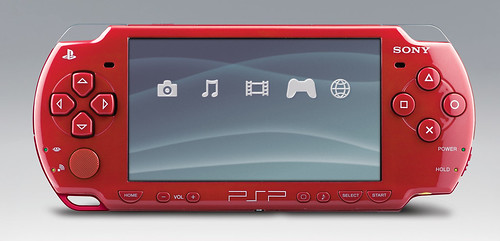
Limited edition Kartos PSP looking hot !

Review: Drakes Fortune

GameSpot Score 8.0
Incredible production values and plenty of thrilling moments help make Uncharted an action-packed adventure, in spite of some slightly uneven gameplay.
  • Lush jungle environments are stunningly realized
  • Drake's animations are nuanced and naturalistic.
(Gamespot: Ryan Davis)

Uncharted: Drake's Fortune is not a game about new ideas. The gameplay can and has been summed up as "Tomb Raider meets Gears of War," and the story plays almost like an unfilmed National Treasure script, which is another way of saying that the Indiana Jones influence on the story is palpable. Keep in mind that "derivative" isn't the same as "bad." Developer Naughty Dog has assembled its borrowed parts with great proficiency to create an action adventure game with momentum, one that is filled with exciting set pieces, a real cinematic scope, and some of the most gorgeous visuals you'll see in a game.

That Uncharted: Drake's Fortune is a game that trades in archetypes is apparent throughout the story. You'll play as Nathan Drake, an independent adventurer with a wry sense of humor who claims to be a descendent of Sir Francis Drake. That fact figures prominently in the narrative as you go hunting for an ancient relic believed to be hidden somewhere on an uncharted tropical island. The supporting cast includes your friend Sully, who's a cigar-chomping, affable cad with a taste for trouble, and Elena, a confident TV reporter who splits her time between being your sidekick and your damsel in distress. There are villains as well, including Nathan's dry British counterpart as well as a belligerent pirate captain, though you'll likely find their minions far more threatening. The game attempts to add some twists and turns to the plot, but they never really pan out. Nevertheless, the story generally moves with efficiency, as well as some occasionally snappy dialog.

Even if what's happening during the in-engine cutscenes isn't significant, it always looks great. Much of the game takes place in dense jungle environments and a variety of ancient ruins, which the game renders with a nearly photorealistic level of detail. Plants sway, water trickles, and the textures really look like they've got texture. There are a few moments when the game goes outside its wheelhouse with some murky industrial environments that look flat and drab by comparison, but these sequences are rare.

Nathan himself isn't a particularly flashy-looking character in his dirty gray shirt and jeans, but the subtlety of his animation conveys more about him than any outfit would. He'll do a stumbled half-step when traversing uneven terrain, and you'll see him wince when a bullet gets too close to comfort during a firefight. Likewise, his arms will flail spastically during a big jump, and afterward he'll dangle precariously by one hand on the edge he was aiming for. When he gets into a fistfight, half the time it's surprising he makes it out alive. Even when he's performing seemingly impossible acrobatic tasks with ease, the quality of the animation gives him a real sense of fallibility. There's also some terrific facial animation, of which you'll see plenty during cutscenes, though you'll catch glimpses of it during gameplay as well. When a grenade lands near Nathan's feet, you can see the fear in his eyes. The technical feats required to produce what you see on the screen in Uncharted boggle the mind, and the end results make it hard to look away.

The same terrific attention to detail in the graphics is paid to the way Uncharted sounds. The dynamic score is appropriately big and sweeping, the weapon fire has a real clap to it, and the voice cast really nails its characterizations. There are plenty of little touches that fill things out nicely as well, such as the way you'll hear Nathan mutter to himself as he tries to calm his own nerves, or the muffled ring you'll hear everything filtered through when an explosive goes off nearby.

Uncharted ultimately uses all of this glimmer to deliver a gameplay experience that is fast-paced and intermittently spectacular, but also really familiar and a little inconsistent. There are two significant concepts in Uncharted that make up most of the game's running time, though they very rarely intersect. There's environment traversal, which will have you leaping across chasms, scrambling up ledges, and swinging on vines to progress through the game. As good as Uncharted is at making this stuff look harrowing, the game gives you a lot of direction as to where you need to go next, as well as a lot of leeway in the accuracy of your controls. It's easy fun to scrabble your way across these occasionally contrived environments, but other games have done it more elegantly.

By comparison, the combat can be devilish at times in its difficulty. The combat consists mostly of gunplay, and you'll be brandishing a variety of handguns, assault rifles, shotguns, and grenade launchers over the course of the game. Nathan's a pretty fragile dude, and it takes only one or two shots before the color starts draining out of the screen, which makes it important to find and use cover intelligently. By comparison, the pirates and mercenaries that you'll face through most of the game are remarkably sturdy, and can regularly absorb half a clip before going down. Headshots help move things along, though oddly, we found pistols to be far more effective for this than anything other than the sniper rifle, even at several hundred yards.

Enemies are also pretty smart, and if you stay in one position for too long during a firefight, they'll flank you. Dealing with half a dozen cagey enemies who can take roughly as much damage as you isn't impossible, but it can often take multiple tries, which can be fist-clenchingly frustrating when dealing with wave after wave of enemies. There are portions of the game where it seems like you're just moving from one infuriating firefight to the next, and it creates a weird contrast to the easygoing platforming stuff. If you can get close enough to an enemy without getting perforated, which is a rarity, there's some simple hand-to-hand combat. It looks more dynamic than it really is in terms of gameplay, which is both a credit to how hard-hitting the fisticuffs look and a slight against their simplicity.

Amidst all the jumping and shooting, the game includes some straightforward environmental puzzles, as well as some really entertaining vehicle sequences, including a lengthy chase sequence where you man a gun on the back of a jeep, and another that has you piloting a personal watercraft up a raging river. The game is also fond of those little interactive cutscenes that every God of War and Resident Evil seems to be brimming with these days, and though the novelty wears a little thinner every time they crop up in a game, they still work well enough in Uncharted. There's a little bit of motion control wedged into a few spots, but their pretty halfhearted, which makes it a bit of a relief that they don't show up that often. Interestingly, Uncharted uses a performance-based reward system very similar to the Xbox 360 achievements to dole out making-of featurettes, concept art, alternate costumes, and the like. It's a minor touch, but it's a smart and proven way to enhance replay value.

It took us about eight hours to get through Uncharted: Drake's Fortune, and it was an action-packed eight hours, without much in the ways of load times or informational status screens to break it up. The imbalance between the gunplay and the platforming is jarring but forgivable--but the platforming itself works pretty well and looks fantastic thanks to the game's excellent motion-captured animation. If nothing else, Uncharted is a graphical showcase for the PlayStation 3, and it dazzles the senses at nearly every opportunity.


TGS '07: Metal Gear Solid 4 Hands-On

(Gamespot: Brad Shoemaker)

Check out the latest craziness in this action-packed MGS4 trailer from TGS '07.
Watch | Download

TOKYO--You may have heard of Metal Gear Solid 4 by now. It's one of the PlayStation 3's most important exclusive games in the race for next-generation dominance. It is also creator/director Hideo Kojima's purported last outing with his seminal stealth series. And it's playable here at the Tokyo Game Show. We were lucky enough to sit down with illustrious Kojima Productions producer Ryan Payton for an all-too-brief 90 minutes with the game, during which we found that many familiar mechanics have changed. But the heart of Metal Gear Solid is definitely still beating here.

First, it's worth pointing out that the demo of the game we played is essentially the same one Kojima Productions began demonstrating publicly back in July. So if you haven't seen that video yet, take a look to see everything we're talking about here. Luckily, Payton contextualized the action we played in the demo and filled us in on the initial story of the game. As it turns out, that gameplay demo is set only about 15 minutes into Metal Gear Solid 4, so you'll basically watch the intro sequence and play a very brief section. Then you'll end up right in that dusty village setting that we've seen so much of during the past two years. Payton confirmed during our demo that this Middle Eastern area is just one of the locales you'll visit throughout the course of the game. Just because that's all we've seen of MGS4 so far, don't think the entire game--or even the majority of it--takes place there. Payton let slip that you'll also travel to South America later in the game, among other places.

Before we jumped into the demo, we stepped back and got the scoop on the storyline at the outset of MGS4. The game will begin with Col. Campbell contacting Solid Snake to deliver the disturbing intelligence that Liquid Snake is alive and running Outer Heaven. This is a dummy corporation that oversees and controls private military companies all over the world. The PMCs will essentially act as Liquid's private army throughout the game, so they'll be the on-the-ground enemy forces you'll be fighting against. The PMCs will also vary between areas. For instance, the company in the Middle East was called Praying Mantis, but the one in South America will have a different name and appearance.

Further intelligence indicates that Liquid is currently operating in the Middle East, so Campbell essentially hires Snake to travel there to perform a contract hit on Liquid and put an end to his machinations. It's important to note that the villain we're talking about here is actually Liquid Ocelot--Revolver Ocelot's body with Liquid Snake's attached arm and consciousness. So the bad guy will look like Ocelot, but there's nothing of Ocelot left in there: The personality is 100 percent Liquid Snake. However, you'll hear Ocelot's voice actor delivering the English voice-over in the forthcoming TGS trailer and in the final game, so no more Cam Clarke here (sorry Ninja Turtles fans).

At any rate, Snake's first objective on the ground in the Middle East was to meet up with a group of informants that have been tracking Liquid's movements, which we found out through a dialogue scene with longstanding support character Otacon via codec transmission. The codec interface has come a long way since the minimal, 2D talking heads in the first MGS. Now, it's been overhauled to show a video window of the speaker that takes up a much larger portion of the screen (though you don't see Snake during codec scenes anymore). Otacon was sitting in a fully 3D-modeled room that we could move the camera around in a limited fashion, so you'll get some visual context on where your codec buddies are physically located every time you talk to them. Another nice feature is that you can fast-forward by hitting the triangle button--complete with superfast dialogue delivery and sped-up animation. Then you can let off the button to let the conversation resume with full spoken dialogue. Payton confirmed that the lips will be synced to the audio in MGS4 rather than tuned by hand, so the lip sync should be much more believable in the English and other localized versions of the game.

To find the informants, we had to move down a length of streets and nearly demolished houses to reach the rendezvous point. You can watch that gameplay demo from July to essentially track our progress through the area, although like much of the game, this section had more than one path. For instance, in the starting area, we could move down the street itself on the left, but that route was blocked by a number of Praying Mantis soldiers and a large armored vehicle with a top-mounted gun turret (which Payton said will replace the security cameras of previous games). So we chose to break to the right to cut through some ruined buildings, which afforded us a number of crawlspaces and blast holes. In these areas, we could slink through and avoid most of the soldiers in the area.

So how does the game play? As mentioned, it's different yet the same, in that the actions you perform--things like taking cover and pulling close-quarters combat moves on unsuspecting soldiers--are still in here. But the control methods you use to perform them are different and largely streamlined over past games. The "action" interface--that is, anything you make Snake do that isn't combat-related--is now assigned solely to the triangle button. That ranges from climbing up ladders and vaulting over low barriers to simply walking up to a wall and taking cover against it (which you used to do by running Snake headfirst into the wall). Anytime there's an available contextual action, you'll get a small icon at the bottom indicating what you can do by hitting the triangle button. We saw one exception to this rule when Snake climbed into a garbage container, which puts you into first-person view: You'll have to flick the Sixaxis upward forcefully to push the lid open and climb back out.


Crouching is less awkward than it used to be, as well. Previously, you had to tap the X button multiple times--first to crouch and then to go prone--which as often as not made you end up in a position other than the one you wanted. Now you can hit X once to drop to a crouch or hold X to go straight to prone, which ought to eliminate the confusion. Better, you can now move around in the crouch position, instead of dropping to a crawl as soon as you started moving forward. This will make Snake less visible and make less noise as you move around. It didn't seem like he moved much more slowly than in a full running position, so this will probably be the default stance for many players as they move around the game.

From what we could tell, the biggest changes to MGS4's gameplay are in the shooting controls, which have never been the strongest point in the MGS series. The game uses a low third-person camera like the one first seen in MGS3: Subsistence, so it's already more like a third-person shooter than the previous, predominantly stealth-oriented outings. Furthermore, you'll have an auto-aim setting that you can turn on, which will essentially lock your aim to the enemy most directly in Snake's line of sight. (You'll see a small hovering icon indicating which enemy you're locked on to.) Then you'll hold L1 to engage the lock so that you can fire at and strafe around that enemy while you're running around.

More-skilled players will be able to toggle the auto-aim with a tap of the square button, which makes Snake unable to fire from the hip. Why would you want to do that? Because with auto-aim off, holding L1 will bring the camera down to a Gears of War-style over-the-shoulder firing mode that lets you aim precisely for headshots and the like. You can also switch which of Snake's shoulders you're looking over, depending on the surrounding cover. You lose the advantage of being able to kill enemies on the run with the auto-aim turned off, but we found the manual-aim mode let us kill enemies much more quickly by aiming for the head. You'll also get quite a satisfying rag doll effect when you take troops down this way; they look like they go down hard with the impact of your bullets.

That's when you actually want to shoot at your foes, anyway. It will still behoove you to remain hidden and neutralize your enemies silently--or it wouldn't be a Metal Gear game. We gained a better understanding of Metal Gear's new threat warning indicators as we played. Kojima Productions has done away with the alert levels in previous games; now, the intensity with which enemies are searching for you will primarily be indicated by contextual means, such as the background music. You'll also have a translucent ring around Snake that will act as a combination of the old radar and alert indicator. The ring will be still when you're not in danger at all, but it will become rippled and turn red when enemies are gunning for you. Each ripple will point in the direction of a nearby enemy, and the size of the ripple will indicate how close they are to you. Payton said this change was made to keep your eyes focused directly on the action, rather than making you stare at a small radar map in the corner of the screen to avoid pursuit.

There will be more battlefield influences on Snake for you to contend with in MGS4, though we only got the bare overview of them in our demo (Payton said the team doesn't want to give too much away about these mechanics yet). Directly underneath the health bar is your psych meter, which is broken into four segments. Your psych meter will diminish in extreme heat or other adverse weather conditions (temperature, weather, and wind direction are indicated in the map screen). It can even go down due to the stench when you climb into a dumpster. To raise your psych once it's gone down...why, you whip out your favorite nudie magazine, of course. This process is surprisingly involved. You'll bring the magazine up in first-person view to see the lovely, mostly bikini-clad ladies within, and each new picture will rapidly replenish your psych for a few seconds. The rub (ahem) is Snake will quickly tire of each picture, so you'll have to keep flipping through the issue to keep getting psych back. We're sure committed players (cough) will make a point of recovering all the magazines in the game. Alas, Payton didn't talk much about what psych will influence, other than to say that Snake can pass out when the meter is fully depleted.

Then there's the stress indicator, which is expressed as a percentage underneath the psych bar. This one is influenced more directly by battle conditions. When you're safely hidden in the shadows, it will sit at zero. When you're being pursued, it may go up a few points. When you're running down a street in a hail of gunfire with bombs exploding around you, your stress level will soar. It's at these times that you'll achieve a sort of "combat high," which will increase your firing accuracy and halve the damage you take from enemies. This boon only lasts for about 15 seconds, though, after which you'll crash from the high. Then your accuracy and such will actually go down. It's not clear yet whether you'll be able to control the use of this effect, or whether it will simply kick in when the conditions are right.

Close-quarters combat has also been enhanced for MGS4. You'll be able to do a basic melee move when you get up close to an enemy, and you have a two-handed weapon--like a rifle--equipped, but you'll get the best close-quarters combat moves when you're using a pistol or the new stun knife. As before, you can throw an enemy or cut his throat after you grapple with him, but there will be more complex moves available for advanced players. We pulled off a fairly difficult submission hold move of sorts that required us to first grapple, then crouch, then let off the hold button briefly, flick the analog stick to the side, and then press the hold button again. This forced the enemy onto the ground, where Snake quickly rendered him unconscious. It seems these advanced moves will be most useful for neutralizing enemies quickly and in a nonlethal way.


Sure, Metal Gear is all about sneaking, but some sections of MGS4 will actually encourage you to go nuts with all the those military toys you find in a Metal Gear Solid game. Payton referred to these sections as "warfare" levels, where you won't even have to worry about stealth; you'll just run straight into the fray and let loose with all your weapons. In the demo, we had access to a number of rifles, submachine guns, shotguns, pistols, sniper rifles (which you can now fire from the hip, rather than being locked into the scope view), and even the antitank javelin weapon, which we used to obliterate a couple of those turret-equipped armored vehicles.

It's in these warfare sections that you'll best be able to prove your mettle to the local militia fighting against Liquid's PMCs. To win their trust, you'll simply have to avoid killing them and focus on killing the PMC soldiers. You can also approach militiamen and use the triangle button to hand them healing items, such as rations. They'll verbally thank you and otherwise indicate that they're impressed with your help. Afterward, they'll refrain from attacking you and simply help you fight against Liquid's soldiers instead.

When you're fighting through the all-out warfare areas, you'll get to rely on the most diverse array of weaponry yet in a Metal Gear game. This is because you can now modify your weapons extensively as you acquire new gear for them. Each weapon will have multiple mount points, and you can attach new equipment to those points. In the example we saw, the M4 rifle had a top mount where we could stick a scope and a bottom mount that would accept a flashlight, grenade launcher, or several other pieces of gear. Almost every weapon will now have an alternate fire mode in the game, which is also how you'll use that interesting stun knife we mentioned earlier. Primarily, you'll slash with it, but it also has a taser integrated, so you can zap an enemy with the alt-fire instead if you want.

We also received a couple of entertaining toys from Otacon toward the end of the demo. The Metal Gear Mark II can be seen in the gameplay demo video, which you can use for battlefield recon and to zap unsuspecting enemies with its included taser weapon. The Mk. II can only go so far before it loses signal, though, and enemies can still take it out if they see it. We also got the "solid eye" eyepiece, which gives you a tactical battlefield readout that identifies other soldiers as either militia or PMC members, as well as shows you the location of weapons you can pick up in the field. The solid eye will also offer a zoom mode like the old scope, which will let you read this information from a distance, and an infrared mode that shows you highlighted human beings, as well as important battlefield features, set against a background of green video noise.

At the end of the demo, we finally reached the rendezvous point to find none other than redheaded Meryl Silverburgh and her new unit, Rat Patrol. This group is apparently a UN-sanctioned strike force tasked with keeping tabs on Liquid Ocelot's movements around the world. Meryl's Rat Patrol unit consists of the two burly characters (one bald, one with a Mohawk) that you can see in the latest trailer, as well as Johnny, the inept soldier with the weak stomach who's been showing up throughout the Metal Gear Solid series as comic relief. Too bad the demo ended there because we're really curious now to see where the story is going.

Finally, it's worth mentioning that we played MGS4 with the just-announced-this-morning Dual Shock 3, Sony's vibration-equipped PS3 controller. The thing looks just like the Sixaxis and from what we could tell, it weighs about the same as the old PlayStation 2 version of the Dual Shock. The rumble effects in the demo were also appropriate for the combat and traversal actions we were taking. There's really not much of a story here--it's just traditional force feedback that works like you'd expect--but we're glad all the same that Sony was able to integrate it into the PS3's controls before MGS4 ships because this is the sort of game that would really benefit from the inclusion of force feedback.

Frankly, an hour and a half felt like far too short a time with a demo we probably could have spent all day mining for details. There are even more mechanics at work in MGS4 that bear description. For instance, we learned that you'll be able to save patterns that you've acquired for Snake's octo-camouflage suit for later use in the game. We'll just have to wait until Konami opts to show more of the game to the press. Or if we're really unlucky, we'll have to wait until it ships to retail before we can report more of the new gameplay, as well as story details, that Kojima and its 200-strong team have poured into Metal Gear Solid 4.


MGS4 solidifying in June, Dual Shock 3 rumbling in April

Konami's stealth-actioner to be available stand-alone, bundled with 80GB PS3, rumble-equipped controller; Retailers list ship date as June 12; New Sixaxis arriving two months earlier for $55.
By Tom Magrino (Gamespot)

As Hideo Kojima's "final" installment in the Metal Gear Solid series, Konami's Metal Gear Solid 4: Guns of the Patriots is uniquely positioned as one of the most heavily anticipated PlayStation 3 titles from a dying breed of third-party console exclusives. Today, Sony revealed via its PlayStation Blog that Metal Gear Solid 4 would arrive on the PS3 in late Q2 2008, which runs until June 30. The news comes as part of the Destination PlayStation retailer conference, which is currently under way in Arizona.

While Sony wasn't more forthright with an exact date, retailers, which sometimes leak release dates through online listings prior to publishers' actual announcements, seem to be under the impression that the game will surface in mid-June. According to listings on Amazon and GameFly, MGS4 will take to the streets on Thursday, June 12, while GameStop has the game slated for Tuesday, June 17. Publishers typically choose to release high-profile titles on Tuesday in the US.

To promote Metal Gear Solid 4's release, Sony also revealed the game will be available as part of an 80GB PS3 bundle. In addition to the game and system, the bundle will include a Dual Shock 3 controller and will retail for $499.99. Presumably, the Dual Shock 3 will replace the Sixaxis controller currently available in the $499.99 80GB SKU.

Similar to Microsoft's use of Realtime World's Crackdown to hand out keys for the Halo 3 multiplayer beta, Sony also said it will be guaranteeing access to Metal Gear Online's multiplayer beta test for those who preorder the game. The test is expected to commence in late April.

The Destination PlayStation conference also yielded an update on the Dual Shock 3, which Sony officially took the wraps off of during 2007's Tokyo Game Show. The much-requested rumble-equipped, motion-sensing wireless controller will arrive in North America in April at the price of $54.99. According to Sony, more than 100 PS3 games will be compatible with the controller, including Uncharted, Ratchet & Clank Future, and MGS4.

Grand Theft Auto IV Hands-On

(Source Gamespot: Guy cocker)

Grand Theft Auto IV is looking superb. Perhaps even more importantly, it's looking finished. The millions of eager fans who were disappointed by the game's postponement can rest easy, because bar a major catastrophe, the game should make its planned April release date. Having played it for two and a half hours at Rockstar's London offices, we can report that the game is running smoothly, has relatively few bugs, and is as intricately detailed as we'd hope a GTA game would be. In fact, playing five missions and exploring two of the game's massive districts was almost too much to digest in one sitting, and we left intoxicated by the amount of new characters, areas, and gameplay that it has to offer.

Our demo kicked off at the beginning of the game itself in a mission called Jamaican Heat. Niko has traveled to Liberty City on the back of a promise of wealth and opportunity from his cousin Roman. Once Niko arrives, he finds the truth to be very different, and we join them both in the office of Roman's taxi firm. Roman is fielding phone calls from angry customers while Niko is pacing up and down the room. Niko is then tasked with going to meet a character called Little Jacob, a Jamaican stoner whose main interests lie in the acquisition and use of drugs.

The voice-over work is pretty much finished at this stage, and it's of the same high quality that we've come to expect from the Grand Theft Auto series. Little Jacob's vocal style makes him pretty hard to understand, but there are subtitles available should you need them. The incidental conversations still help to flesh out the characters in GTAIV, and they've become even more well-rounded thanks to a multitude of dialogue recordings. Conversations change depending on how you approach missions, so if you have to repeat them, you're unlikely to hear the same exchange the second time. We played one assassination mission that took place on a train platform, and the preceding cutscene changed completely when we approached the target from a different angle.

GTA: San Andreas really upped the ante in terms of character customisation, given that it let you completely change your appearance through exercise, diet, and clothing. GTAIV ditches the role-playing game elements, but you'll still be able to customise Niko as well as take him for a bite to eat. During some of our downtime in Liberty City, we dropped by a discount-clothing store and swapped his standard jeans-and-jacket combo for a more sportswear-oriented look. We were able to buy sweatpants, a sports jacket, boots, and sunglasses during our visit, and although it was hardly appropriate attire for an Eastern European crook, we liked being able to go into a shop and change clothes before a mission. After that we headed to a local diner, and in another nice touch, the staff and customers put their hands in the air. Apparently everybody thinks you're about to rob them when you forget to put your weapon away.

Although Rockstar has often pushed the envelope in terms of story, characterisation, and music, it has been criticised in the past for poor control systems. San Andreas tried to improve things with auto-aim and lock-on, but the combat still felt muddled and imprecise. The controls have evolved once again for this outing, with subtle changes made to the locking system; targeting is handled on the left trigger, and it automatically locks on to the closest enemy in sight. If you fire with the right trigger, you'll shoot at the body of your enemy, but this is nonfatal and it can take more than a few shots to bring your opponent down. However, flick the right analogue stick upward and you'll aim for the head, where it's one shot to kill. Though this takes more dexterity to pull off, it's worth attempting if you want to take successive enemies out in one fell swoop. In addition to the new aiming system, there's also a new cover mechanic that uses the right bumper on the Xbox 360. It's not quite Gears of War in terms of run-and-gun action, but using cover does let you consider your targets from safety before popping out to fire, or even blind firing if you're in real trouble. You can also hold "A" to run between cover, and though it's not done to the same extreme as in John Woo's Stranglehold, you'll see enemies pulling off slides and rolls as they move between cover.

These small adjustments certainly refine the regular combat of GTAIV with respect to its predecessors. However, the biggest improvement has undoubtedly been in drive-by shooting. In previous games, you were limited to firing left and right out of the car at fixed right angles, but now you're able to shoot freely by holding the left bumper and moving the right analogue stick. When you first move to aim, Niko smashes out the window of the vehicle and a targeting reticle appears. It's still slightly fiddly if you're trying to drive and shoot at the same time, but we managed to take down a whole gang of drug dealers on our first attempt.


The GTA series isn't particularly noted for its technically advanced graphics, but powered by the RAGE engine that debuted in Table Tennis, GTAIV is certainly a good-looking game. The city stretches as far as the eye can see, which means that Algonquin's tall buildings and bright lights tease you when you start the game restricted to the Broker district. With that said, the RAGE engine accomplishes this technical feat by blurring out the background image in a necessary but visually distracting act of trickery. Hopefully the team will be able to balance this out once it has optimised the game further to allow for a better mix of fidelity and performance. On the plus side, we were encouraged by the lack of slowdown at this stage, and with hardly any other bugs to be seen during our playing time, it's looking very encouraging for the game's planned April release. There are so many incidental details in GTAIV that it's sometimes easy to take them for granted. You still have a small map in the corner of the screen to help navigate, but more expensive cars also have a GPS system. As you drive a Mercedes-style car around Liberty City, a gentle female voice will tell you where to turn to reach your target. It might not always pick the quickest route, but it is clever enough not to guide you down one-way streets. As with previous GTAs, bridges will initially be closed off to restrict players from entering certain parts of the city, but we were able to skip forward in the game and cross the bridge from Broker to Algonquin. The only problem: tollbooths have been included in the game, and speeding through the barrier resulted in a throng of police cars chasing us over. The next time we tried, we slowed down at the window, paid the toll, and waited for the barrier to open.

Our demonstration ended with an assignment called "Deconstruction for Beginners," an assassination mission in which we had to take out some pesky union leaders for a new character called Playboy X. The first part of the mission required us to scale one of the tallest buildings in the city using a small lift; just ascending the structure took the best part of a minute. We were still a good way off from the heady heights of the Empire State Building, which was visible in the distance, but our building made for a spectacular view across the dock. From our vantage point, we were able to snipe a few henchmen perched on cranes before descending and finishing off the leaders on the ground. This particular mission also serves as a tutorial for using grenades, and you can now blindly toss grenades from behind cover to produce some pretty spectacular explosions. It has to be said that in terms of core gameplay, GTAIV remains pretty much the same as the previous games. You'll be playing the same sort of missions, mixing with unsavoury characters, and pulling off crazy stunts during downtime. But the attraction of GTA was always in its sandbox possibilities, and the new Liberty City is the most intricate playground yet. Rockstar was particularly generous when it came to free time in the city, and whereas the five missions we played were fairly regimented, we were encouraged to explore the surroundings.

Our final experience in GTAIV came as we got in a car and drove to what may be the geographical highlight of the game. Broadway looks just like the area of New York that it's modeled on, with gaudy neon lights providing illumination for the people and traffic below. Once again, the enjoyment comes from the details, including posters for fake movies and theatre productions that sit alongside the "NAVSAQ" stock-exchange ticker. Driving around, we also found a couple of the 50 stunt jumps that will be featured in the final game. If you get a good run up in a fast car, you can nail massive jumps off of these ramps and clear rivers or barren land in a single bound. The upside of the stunt jumps is that you get recognition (and likely achievement points) for completing them, and you can control the camera to speed up or slow down the action during the jump. The downside is that if you crash into something when you hit the ground, you'll go hurtling through the windscreen.

GTAIV looks magnificent so far. It takes the humour, style, and character of the previous games and wraps them in a sumptuously detailed new city. That said, there's still plenty that we haven't seen from the game--namely the PlayStation 3 version and the multiplayer modes. Although the game is a matter of weeks away, Rockstar has promised us glimpses at both elements ahead of release. In the meantime, consider us psyched up for the planned April release date.